Tom Wingfield’s guilt over leaving Laura
The Glass MenagerieTom Wingfield’s guilt over leaving Laura is the emotional counterweight to his escape from the Wingfield apartment. He follows his father’s path into motion, but cannot make distance into release: in the play’s closing recollection, his travels bring him back to Laura through music, glass, and the image of her candles. The guilt turns escape into an unfinished act, binding the absent brother to the sister whose confinement his departure deepened.
The Cost of Escape
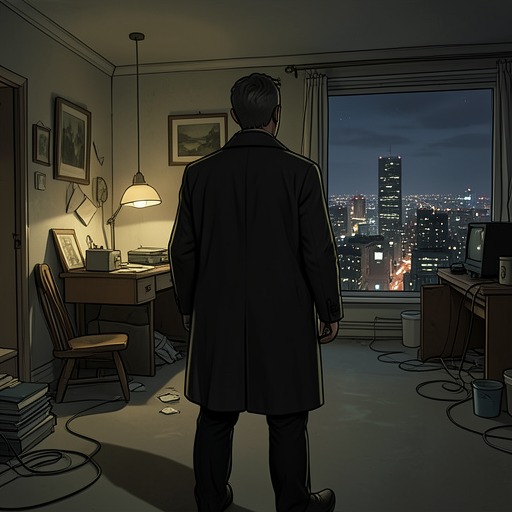
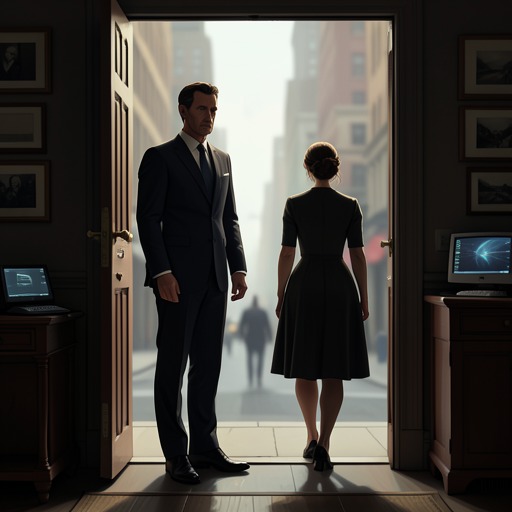
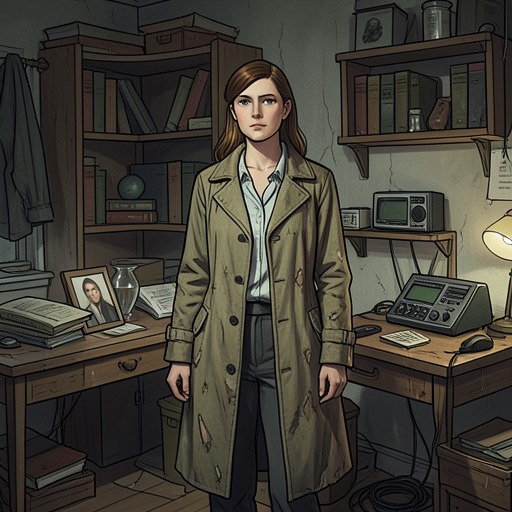
The play sets Tom’s wish for personal freedom against the consequences of leaving his mother and sister behind. His father’s departure has already made flight part of the family’s history; the father is remembered as a telephone man who fell in love with long distances, and his smiling photograph and farewell postcard remain prominent in the apartment. Tom’s own choice is therefore not a clean break but a repetition whose cost he understands: his departure leaves Amanda and Laura further confined to their respective worlds of memory and glass.
Tom first seeks escape vicariously at the movies, but that imaginative outlet eventually gives way to a literal exit down the fire escape and a life with the Merchant Marines. The critic’s account describes this departure as an attempt to find, through movement, what was lost in space. Yet motion does not repair the loss or free Tom from it. His freedom resembles his father’s, while the knowledge of what it costs separates his departure from a simple act of abandonment without undoing its consequences.
Memory Turns Travel into Return
In his closing speech, Tom recounts that he left St. Louis after being fired for writing a poem on a shoe-box lid. He says he traveled extensively and compares the cities sweeping past him to brightly colored leaves torn from their branches. The image makes movement vivid but also conveys detachment: places pass, yet none settles the pursuit that follows him. He says he might have stopped, but something kept catching him unawares.
That pursuer arrives through ordinary fragments rather than a dramatic encounter. Tom names a familiar piece of music and a piece of transparent glass as possible triggers; he imagines himself walking at night in an unfamiliar city, passing a perfume-shop window filled with tiny, delicately colored bottles like pieces of a shattered rainbow. The image of glass carries Laura into the landscape of his travels. At the moment he turns and looks into her eyes, the distance he has crossed collapses into a remembered bond.
Laura’s Unextinguished Claim
Tom directly admits that he tried to leave Laura behind but has proved more faithful to her than he intended. The confession does not describe a reunion: it locates Laura in the recurring memory that interrupts his life elsewhere. His response is restless and evasive. He reaches for a cigarette, crosses the street, runs into a movie theater or a bar, buys a drink, or speaks to the nearest stranger—any distraction, he says, that might blow out her candles.
The candles give his remorse its final image. Laura bends over them as Tom urges her to extinguish them, and the remembered act of leaving becomes inseparable from his inability to stop seeing her. The play ends when Laura blows out the candles, but the gesture supplies no evidence that Tom has escaped the memory: his speech has made clear that the sister he left continues to find him. The closing image holds release and attachment together, making his departure a lasting source of guilt rather than a completed escape.
Narrative and Thematic Significance
Tom’s guilt shapes the play’s framing as well as its family story. He leaves the apartment, yet returns as the teller of the memory; his narration lets him frame the action and then seem to disappear back into it. The closing speech makes that return explicit, transforming the city journey into a circuit in which movement repeatedly gives way to Laura’s presence.
The recurring glass and candle images connect Tom’s remorse to Laura’s fragile, enclosed world. His efforts to outrun the memory—to seek the movies, a bar, a drink, or company—repeat the larger escape pattern without resolving it. The final invocation of a world lit by lightning intensifies the contrast between outward motion and inward persistence: Tom can leave St. Louis, but distance cannot extinguish the attachment, or the guilt, that follows him.